

The SP Motorsports992 GT3RS
The SP Motorsports aerodynamics performance package is for all track enthusiasts who want more downforce out of their 992 GT3RS. While this platform already boasts an impressive 900 lbs (409 kg) of downforce at 124 mph and 1,895 lbs (860 kg) at 177 mph, strict EU regulations and a focus on street driveability have left the RS slightly short of its track focused counterpart, the GT3R.
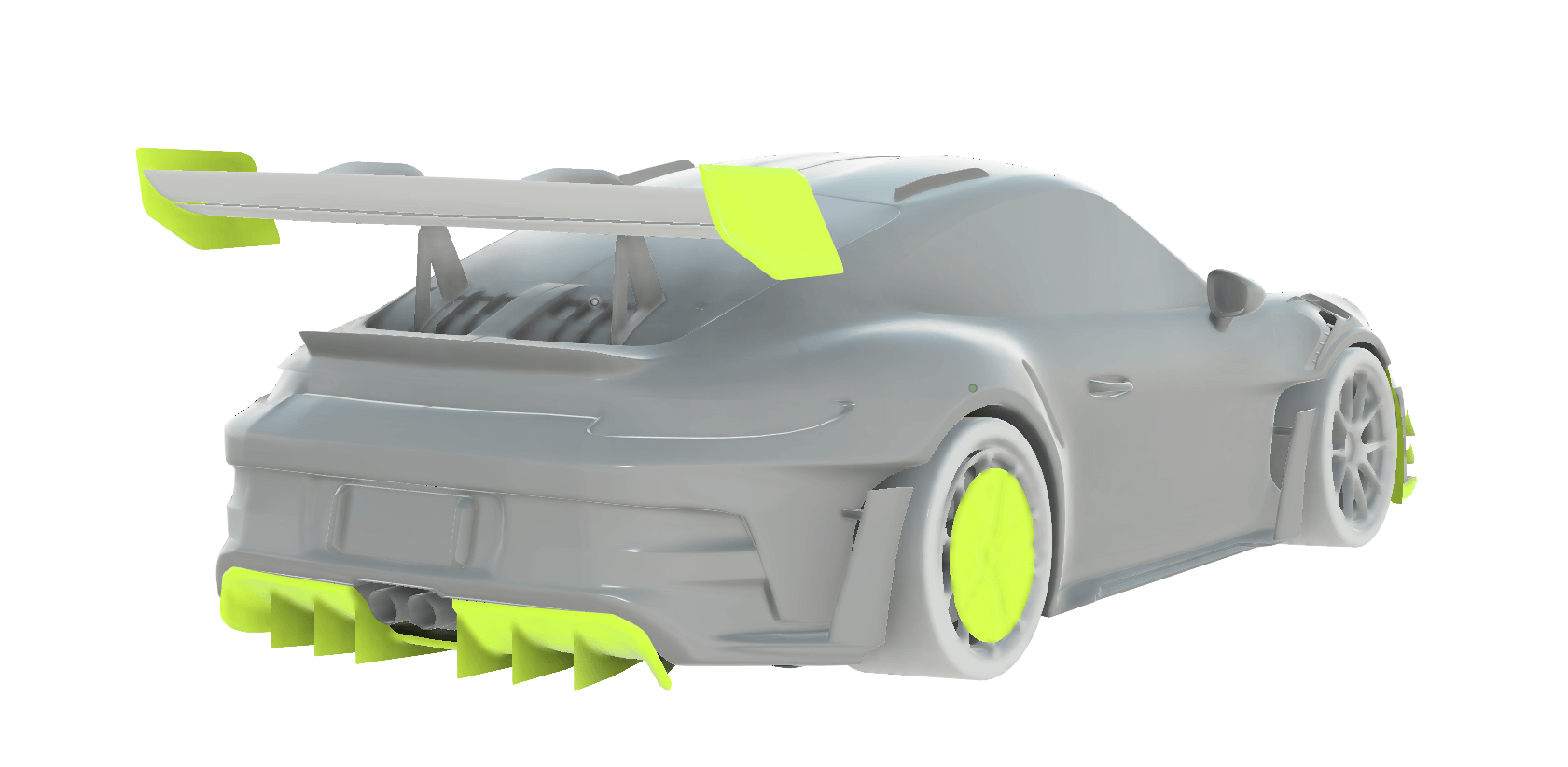
Our R&D process on this car always kept a concise goal in mind: to bridge the gap between the street focused RS and the track focused R. The result is an optimized package consisting of dual dive planes, side splitter extensions, a rear aerodisk, wing endplates, and a wider rear diffuser.
Our GT3RS with the full aero package, stiffer springs, 19-inch Forgelines, adjustable drop links, and Alcon brakes improves performance on the track while still being able to drive hours on the street back to the shop.
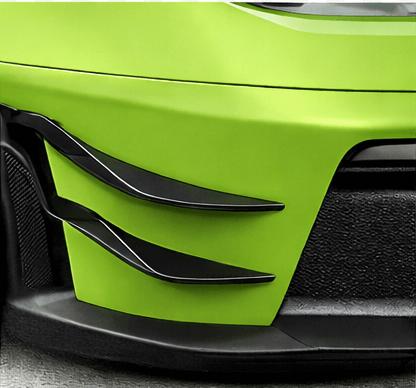
Dive Planes and Splitter Extensions
The RS comes from the factory with a massive rear wing tame front splitter. The result is an aero balance which puts the majority of the downforce on the rear wheels. While this is good for rear grip in acceleration, it can reduce the front end response rate in tight corners.
The already wider tires in the rear produce more grip than the front even without downforce. Add in a rear-biased weight distribution and a rear-biased downforce distribution, and your rear tires will produce more grip than the front throughout the entire track.
Front dive planes utilize an upward slope to both slow down and redirect incoming air. The redirection upwards comes with a natural downwards force on the dive planes. Additionally, the slower moving air has a higher pressure than its freestream counterparts.
A high pressure zone acting upon the 32 square inches of surface area added from our dive planes creates a massive amount of front grip. The splitter extension adds an additional 14 square inches for front end high pressure to create downforce.
Rear Aerodisks
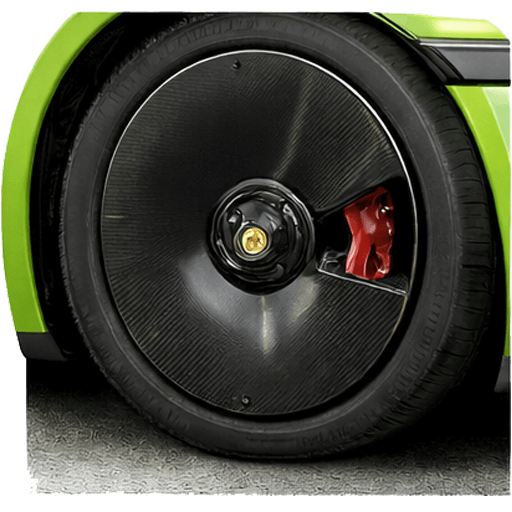
Aerodisks, or wheel covers, are a common modification to reduce drag. Most modern electric cars focused on maximum range will employ some form of solid wheel or wheel cover to minimize drag.
This improvement comes from minimizing the rear wake generated from dirty air thrown out of the wheel wells due to its interaction with the fast spinning spokes. By covering those spokes with a smooth carbon fiber disk, the airstream traveling down the side of the car receives fewer obstructions.
In addition to reducing drag, the faster airstream reaching the rear of the car can help suck air out from the rear wing and diffuser. Our unique design consists of a flat disk with small embossed spokes which serve two purposes:
- The added shape in the flat disk increases radial stiffness allowing up to make the disk thinner and lighter while keeping deflection to a minimum.
- The spoke shape has a negligible effect on the smooth airstream while highlighting our Forgeline GS1R wheels and paying homage to classic wheel covers used by Porsche in the 1980’s
Wing Endplates
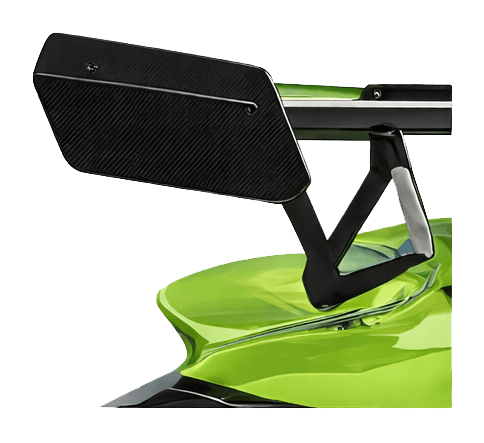
With the cleaner side airflow generated by the aerodisks a larger endplate is needed to capture the low pressure zone underneath the wing. The SP endplate flares outward at bottom edge to better capture this air.
After extensive R&D on the GT3RS we noticed a big gap between the DRS wing and the stock endplate. While the gap is minimized in the DRS closed (high downforce) position the DRS open position is left unable to function at its highest efficiency.
As the wing generates high pressure on the top surface and low pressure on the bottom surface this gap allows spillover between the two and high-drag vortex generation. The SP endplate addresses this issue by significantly reducing this gap.
Rear Diffuser
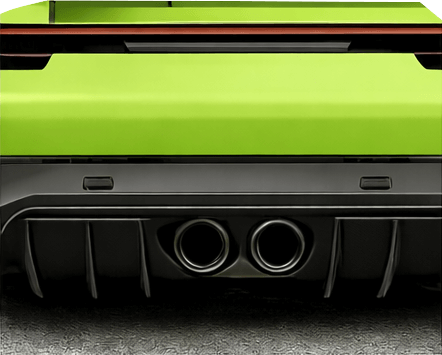
The main goal of a rear diffuser is to expand the high speed air it receives. The 992 GT3RS has a fully smooth bottom with plenty of vanes to manage and speed up the airflow. While this creates massive amounts of downforce, the air must be expanded, or slowed down, back to ambient conditions so that the resulting rear wake is minimized.
Without a diffuser the high speed air would mix violently with the ambient air at the rear of the car reducing the efficiency of the undertray. By extending the outer edges and increasing the height of each fin we are able to hold on to that air for a bit longer before release. Other than the increase in downforce and reduced drag, a huge benefit of the SP rear diffuser is the decrease in weight.
The stock diffuser is made of primarily stamped aluminum while our performance replacement is constructed of purely carbon fiber.
Additional 992 GT3RS Upgrades
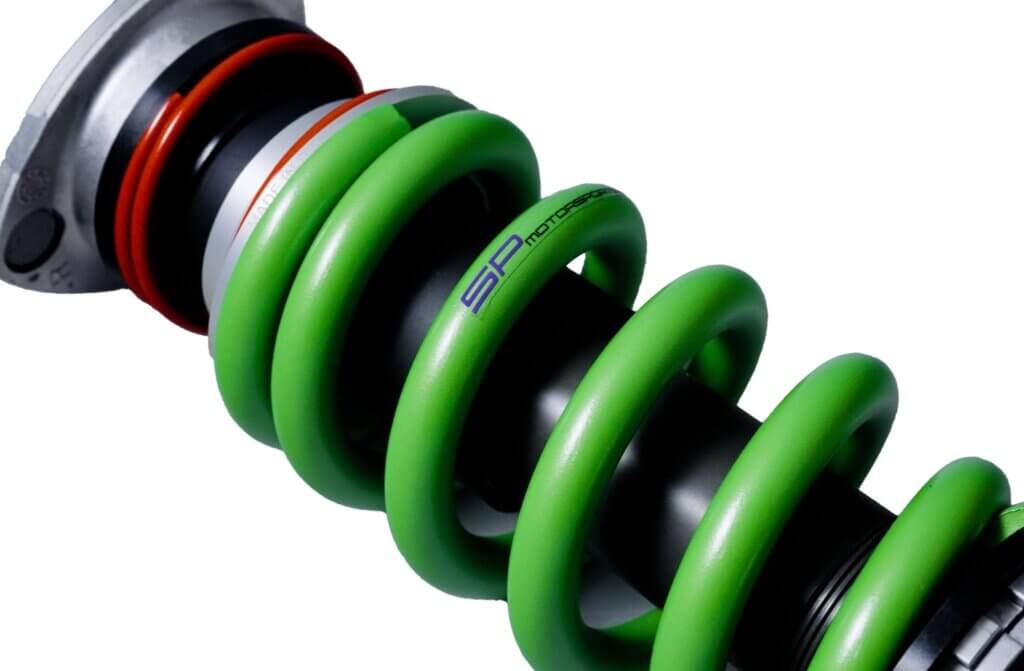
Stiffer RS Springs
This setup is designed for the new generation of RS builds running wider tires. Jumping from the factory 275/35/20 to a wider 295/30/19 front adds more grip, more braking force, and increased steering response. Without the correct spring platform, that extra tire can incorrectly load the chassis and lead each suspension arm away from its ideal position.
With our 992 GT3 RS Aero Package, the springs will experience a greater vertical load at speed from the increased downforce. Without a stiffer spring rate to match, a once functional range of motion in the suspension will be lost. There is also the increased risk of undertray damage from bottoming out.
| Application | Front Spring Rate | Rear Spring Rate | Notes |
|---|---|---|---|
| OE 992 GT3 RS (Progressive) |
140–160 N/mm | 182–215 N/mm | Tuned for road & track balance; softer platform for comfort. |
| 992 GT3 Cup | 260 N/mm | 300 N/mm | Full race spec; designed for slicks & extreme downforce. |
| SP Motorsports Upgrade | 166 N/mm (17 kg/mm) |
211 N/mm (21.5 kg/mm) |
Optimized for wider tires & increased aero load; track-focused yet street-manageable. |
SP x Alcon Brakes 992 GT3RS Performance Brake Kit
Alcon’s brake kit for the Porsche 992 GT3/GT3 RS is a purpose-built, track-focused upgrade that swaps Porsche’s stock hardware for motorsport-grade components engineered for repeatable, high-energy braking. At the heart of the system are forged monobloc calipers, 6-piston up front and 4-piston at the rear, that are nickel-plated for corrosion resistance and extreme stiffness. Those calipers bite on two-piece, floating rotors sized to suit the platform, mounted to lightweight alloy hats and delivered pre-bedded as a matched Pro-System set with pads, braided lines, brackets and full fitting hardware.
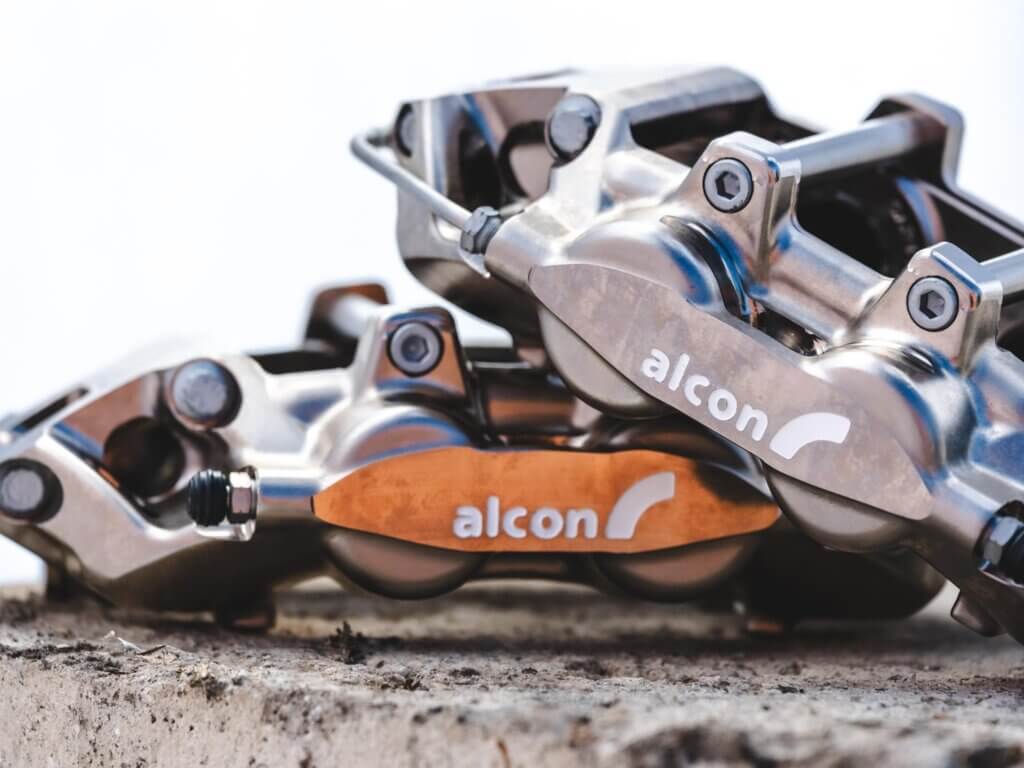
The advantages are numerous: the forged monobloc construction increases caliper stiffness which improves pedal feel and reduces flex under high clamping loads, while the multi-piston layout distributes pad pressure more evenly across a larger friction surface for stronger, more linear initial bite and modulation. The two-piece floating rotor design separates the friction ring from the hat so thermal growth is controlled, cooling is improved, and heat transfer into the wheel hub is reduced — this yields greater thermal capacity and resistance to warping or uneven pad transfer under repeated hot laps. Alcon’s packaged approach (hats, brackets, hoses, and pad sets) also simplifies fitment and ensures the components are matched for optimal performance.
Compared with Porsche’s factory iron steels and even the optional PCCB (carbon-ceramic composite) rotors, an Alcon steel-based Pro-System offers clear operational benefits for dedicated track use. Steel two-piece rotors with appropriate venting and hat spacing sustain higher repeated thermal loads without the catastrophic cracking or thermal sensitivity that can affect ceramics under extreme thermal shock. They also allow the installer and race team to choose from a wide range of competition brake compounds to tune initial bite, dust, and wear to the event and driver — something ceramic systems are far more limited on. For endurance and club racing, teams routinely prefer competition steel systems because they are easier and cheaper to service between sessions, and they maintain predictable bite and fade behavior lap after lap.
SP Motorsports Adjustable Drop Links
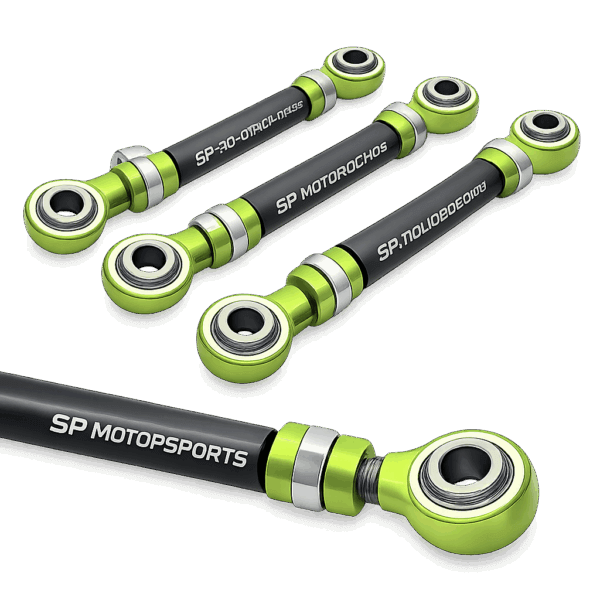
The SP Motorsports drop links add adjustability to the handling of the car by fine tuning the front and rear roll stiffness. By changing which axle receives the stiffer treatment, and the distribution between the two, you can dial in the oversteer or understeer characteristics of the GT3RS after each lap.
The stock drop links offer no adjustability, leaving only 6 total configurations of stiffnesses between the front and rear. With adjustable drop links the number of configurations becomes immeasurable.
The SP Motorsports R&D Process
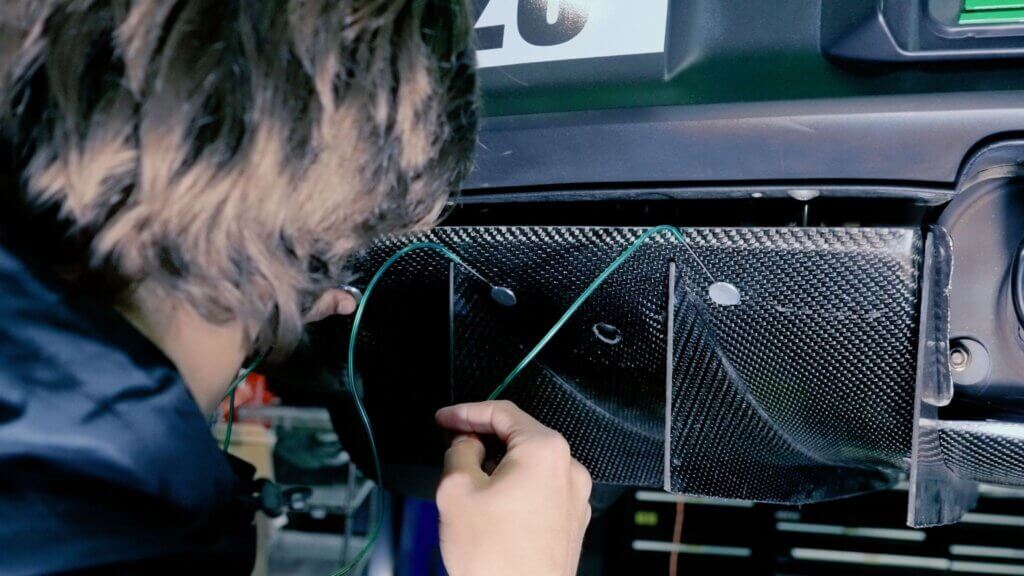
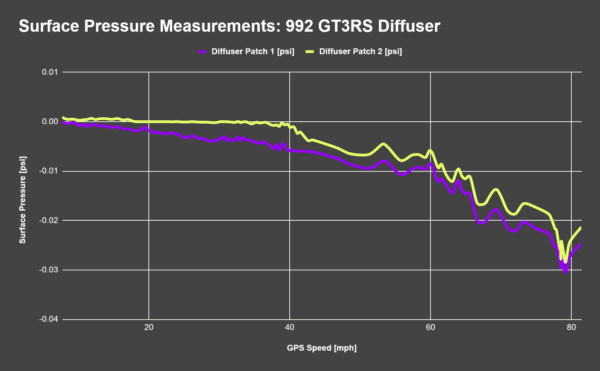
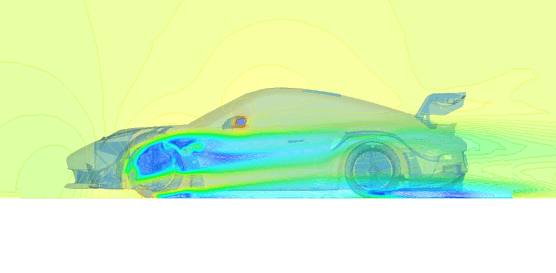
Our R&D process for any component includes detailed design, data analysis, on track testing, and quality-controlled manufacturing. With the design of a performance aero kit we prefer real world data to computer simulations. While advancements in CFD have made quick iterations and design decisions quicker than ever, nothing beats data gathered on track. While many R&D teams fall victim to blindly trusting CFD results, we gather surface pressure data using an array of pressure patches and a differential pressure sensor to log pressure values at each point on the track.
By sending these values to our MoTeC data system we can analyze how the airflow is changed by pitch, roll, yaw, and traffic on track. After getting baseline data and speed vs pressure relationships we can run CFD and confidently conclude whether or not the outputs are representative of reality.
This step is critical to our R&D process and ensures that the final product truly performs as well as we claim. Be confident that all of our products are run on our own cars and rigorously tested during the beautiful California track days at Laguna Seca, Sonoma Raceway, and Thunderhill.